
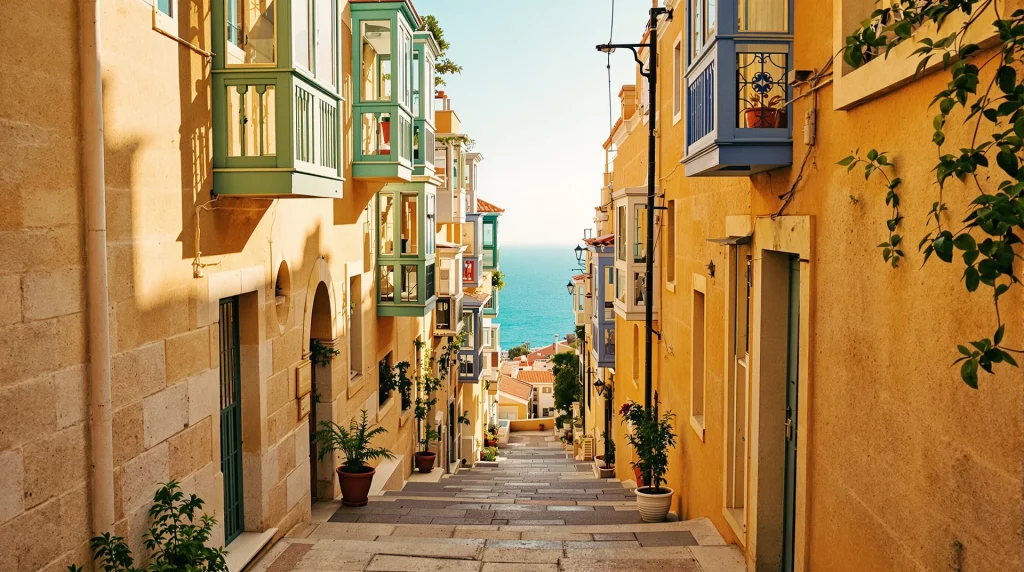

Living in Malta is sun almost every day, low taxes, a dense expat scene, and a genuinely relaxed pace. The trade is space, real nature, and structure. I spent five years there in my early twenties, and it was the right place to learn how to run myself before I needed anything bigger.
I moved to Malta in January 2012, at 19, and lived there full time until I was 24. I left for a few weeks most years (Sweden in summer, somewhere warm to skip the worst winter weeks indoors), but Malta was home base for five years. After that I switched islands and have been living in Cyprus since. So this is not a weekend opinion. It is the long version.
I want to be straight about one thing up front. The place you live shapes your state more than people admit. Light, pace, who is around you, how hard small tasks are. Malta got most of that right for the person I was at 19, and the parts it got wrong taught me to build structure from the inside instead of waiting for the environment to hand it to me. That is really the whole story.
Is Malta a good place to live?
For me, in that chapter of life, yes. I loved my time there. I met some of the best people I know, I had a clean work and rest rhythm, the food was good, and the baseline mood of the island is calm. If you are young, building something, and you want sun and low friction on the lifestyle side, living in Malta is hard to beat.
It is also a place you can outgrow, and that is not a knock. Knowing when an environment has given you what it has to give is its own skill. Mine ran out around 24, and leaving was as good a decision as arriving.
Living in Malta: the real pros
1. The pace lets you regulate
Life on the island is simple and slow in the good sense. People are not wound tight. You have the sea on every side, you can walk most places, and the default tempo is unhurried. When the environment is calm, you have more spare capacity to actually run your own state instead of fighting the city for it. That mattered more than I understood at the time.
2. The sun does real work
Roughly 3,200 hours of sun a year. I grew up with far more rain than light, so this was not a small upgrade. Consistent daylight does something measurable to sleep, mood, and drive. If you have only ever lived somewhere grey, you underestimate how much of your baseline is just the weather acting on your nervous system.
3. Low taxes for a business owner
One of the main reasons people relocate businesses to Malta is the tax setup. Headline corporate tax is high, but with the right structure a lot of that comes back as a refund, which pushes the effective rate down sharply for many owners. There are also no wealth or inheritance taxes, though there is a transfer fee on property. The specifics shift and depend entirely on your personal residency, so treat any number here as a starting point and confirm current figures with a real Maltese tax adviser before you plan around it.
4. A dense, international crowd
Malta pulls in people from everywhere. I met people from more than half the world’s countries on that tiny island, a lot of them building businesses. The sun, the tax climate, and the easy lifestyle act as a filter. You end up surrounded by ambitious people by accident. The daily conversations and brainstorming I had there were one of the real reasons my own work took off. Who you stand next to every day quietly sets your ceiling.
5. Warm locals and low crime
The Maltese are genuinely friendly, the relaxed Mediterranean kind, and they will help you whether they know you or not. I only have good experiences with them. Crime is also very low by EU standards. In five years I never once felt unsafe, and that background sense of safety frees up a surprising amount of mental energy you do not notice until it is gone.
Living in Malta: the honest cons
1. It is tight on space
Malta is one of the most densely populated countries on earth, and you feel it. Space for parking, space for a garden, space for quiet, all in short supply. If you need room and few people around you, this is the wrong island. I learned to build my own quiet (early mornings, a closed door, a clear routine) because the island would not hand it to me.
2. Thin on real nature
There are some lovely beaches, and the Blue Lagoon has the clearest water I have ever seen. But the island is, affectionately, a rock in the sea. It is not diverse, the good beaches get crowded in summer, and once you have seen it you have seen it. Gozo, the second island, has more nature and is worth a weekend, but it is still a weekend. If green space resets you, you will feel the lack.
3. Prices and rentals move around
Over the years rents have climbed and good rentals have become harder to find, then eased again at times. The cost of living moves with demand and global events, so anything you read about prices, including older numbers in this piece, should be checked against current listings before you budget.
4. Almost no structure
This is the one that tested me. Things work in Malta, but there is rarely a clear way they work, and anything bureaucratic is slow going. I once asked a local how to structure my company setup and got, sincerely, “Structure? What do you mean structure?” Joking aside, expect errands to eat time. The lesson stuck though: if the system around you has no structure, you provide your own. That habit outlasted the island.
The weather, honestly
The Maltese weather is most of why people move there, and on balance I think it is excellent. It is not perfect. Summers, especially July through September, are genuinely too hot and humid to be comfortable, around 32C with humidity near 75 percent that climbs to 90 at night. Winters are mild on paper (February averages about 15C) but the indoor climate is rough: no central heating, poor insulation, damp, and cold drafts. Bring more warm clothes than the temperature suggests, because you will be cold sitting indoors. The rest of the year is close to ideal.
Cost of living in Malta
Coming from Sweden, daily costs felt cheap. A good restaurant meal with wine ran around 20 euros, a coffee about 1.50, and taxis were reasonable. Imported goods were the exception: cars, snacks, and toiletries were oddly overpriced. Again, these are figures from when I lived there, so confirm the current numbers before you plan around them.
Living in Malta as an American or other non-EU expat
English is an official language, so the day to day is easy. The friction for non-EU expats, including Americans, is residency and visa paperwork, which runs straight into the structure problem above: it works, slowly, with patience. The tax advantages also hinge on your personal residency, not just on the company. The 183-day question matters. Whatever your passport, do not rely on a blog (this one included) for the legal side. Get a Maltese adviser and confirm what currently applies to your situation.
What island life actually taught me
The thing I carried off Malta was not the tax rate. It was the realisation that a calm environment is an advantage you should use, not lean on. The sun and the slow pace gave me spare capacity, and the missing structure forced me to build my own. Five years of that left me with routines that travel: I can drop into a new place and run a steady state regardless of what the country does or does not provide.
The other thing was the people. The single biggest input to how I built my business was the crowd I happened to be standing in. If you take one practical lesson from living in Malta, take that one. Put yourself somewhere full of people doing the thing you want to do, then show up daily. If you want that effect without moving to an island, that is exactly what we built at the Rise Society and our workspace in Paphos: ambitious people, in one room, on purpose.
If you want more of these relocation stories, the rest are over in lifestyle design.
Rise through self-mastery